
Atlas orthogonal
Home / Atlas orthogonal
Atlas orthogonal
A painless, proven method to correcting your cervical spine alignment
Atlas Orthogonal Upper Cervical Chiropractic in Norristown, PA
Atlas Orthogonal chiropractic is one of the most precise and gentle techniques in the chiropractic profession. It focuses specifically on the atlas vertebra — the first bone in the neck — and uses instrument-assisted corrections guided by detailed imaging to restore proper alignment without cracking, twisting, or forceful manipulation.
At Lifeline Chiropractic in Norristown, PA, Dr. James Stein D.C. B.C.A.O. is one of the few Board-Certified Atlas Orthogonal practitioners in the greater Philadelphia area. With over 30 years of clinical experience, he has helped thousands of patients find long-term relief from conditions including migraines, vertigo, Meniere’s disease, trigeminal neuralgia, neck pain, post-concussion symptoms, and more.
The Supporting Tissue Connection — What Most Practitioners Miss
Beyond the structural correction of the atlas itself, Dr. Stein addresses something most practitioners never evaluate: the compensatory holding patterns in the surrounding soft tissues.
- Many patients with vertigo, Meniere’s symptoms, or head fullness describe feeling lighter, looser, and less pressured shortly after a precise upper cervical correction — a direct reflection of the supporting muscles releasing their chronic guarding pattern.
- When the upper cervical spine is properly balanced, muscles such as the SCM, scalenes, and trapezius no longer need to compensate for the misalignment and often relax almost immediately.
- Restoring proper head and neck balance frequently reduces the chronic muscle tension that amplifies vertigo symptoms, inner ear pressure, and facial nerve irritation.
Dr. James Stein at Lifeline Chiropractic in Norristown, PA has spent over 30 years treating patients with these conditions through neuro-focused Atlas Orthogonal upper cervical chiropractic care. Patients travel from across the Philadelphia region and beyond because the results they achieve with Dr. Stein are different from anything they have experienced elsewhere.
Why the Atlas Vertebra Matters
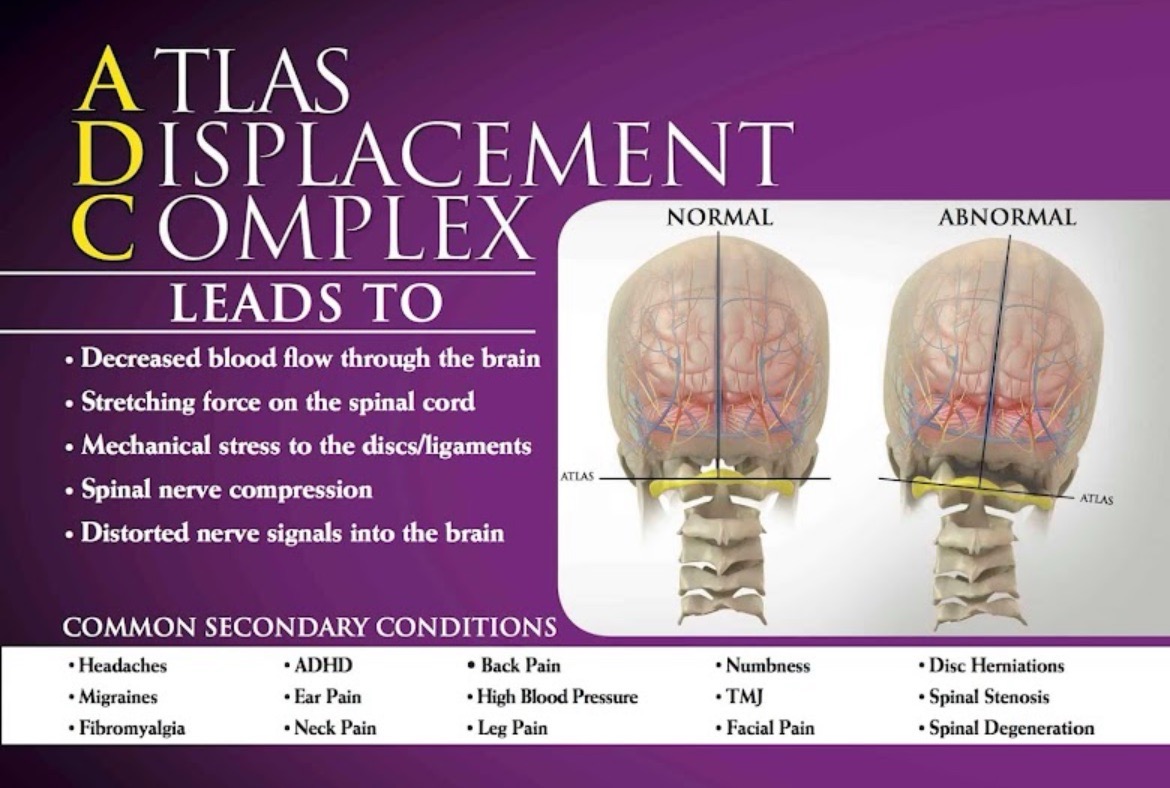
The atlas (C1) is uniquely positioned at the top of the cervical spine, surrounding and protecting the brainstem. The brainstem controls nearly every automatic function in the body — breathing, heart rate, balance, pain processing, and the communication network between the brain and the rest of the nervous system. When the atlas is even slightly misaligned, it can place ongoing mechanical pressure on the brainstem, disrupting nerve signal flow, cerebrospinal fluid circulation, and blood supply to the brain.
What Happens in the Soft Tissues — The Clinical Insight Other Practices Miss
What distinguishes Dr. Stein’s approach from most upper cervical practices is his understanding of what happens beyond the bone. When the atlas is misaligned, the surrounding soft tissues — the muscles, fascia, and connective structures — are recruited to compensate and stabilize. This compensation becomes chronic, and it is often the source of the persistent tightness, trigger points, and muscular pain that patients experience alongside their primary condition.
- When the upper cervical spine is balanced correctly, supportive muscles such as the SCM, scalenes, and trapezius often relax almost immediately because they no longer need to compensate or stabilize the head.
- Many patients describe feeling lighter, looser, and less pressured shortly after a precise correction — a response that reflects both neurological decompression and immediate soft tissue release.
- Trigger points, muscle tightness, stretching, and strengthening protocols can help — but addressing the underlying upper cervical imbalance first often creates a much faster and more lasting response than soft tissue work alone.
- Restoring proper head and neck balance frequently reduces the chronic guarding patterns that keep muscles tight and irritated — patterns that no amount of massage or physical therapy can permanently resolve without correcting the structural cause.
This is why patients who have spent years in physical therapy, massage, and trigger point treatment without lasting results often find Dr. Stein’s approach works when nothing else has.
What Sets Atlas Orthogonal Apart
- Imaging-guided precision — X-rays taken before any correction to measure exact atlas misalignment
- Instrument-assisted correction — no cracking, twisting, or manual manipulation
- Neuro-focused intent — every correction guided by its impact on the brainstem and nervous system
- Soft tissue response — supporting muscles release almost immediately when proper alignment is restored
- Long-lasting results — corrections designed to hold so the body can heal progressively over time
- Safe for all ages — appropriate for children, older adults, and post-surgical patient
Conditions That Respond to Atlas Orthogonal Care
- Migraine headaches and chronic cervicogenic headaches
- Vertigo, dizziness, and Meniere’s disease
- Trigeminal neuralgia and facial nerve pain
- Neck tension and cervical stiffness from SCM, scalene, and trapezius compensation
- Post-concussion syndrome
- Anxiety and nervous system dysregulation
- Arm and shoulder pain from nerve compression
- Auto injury and whiplash recovery
Discover whether Atlas Orthogonal upper cervical care is right for you. Lifeline Chiropractic is located at 2525 W Main St, Norristown, PA 19403. Call 610-630-9800 or visit drjsteinchiropractor.com to request your consultation.
Still Have Questions?
Explore answers to the most common questions about our care, conditions we treat, and what to expect at Lifeline Chiropractic in Norristown, PA.