
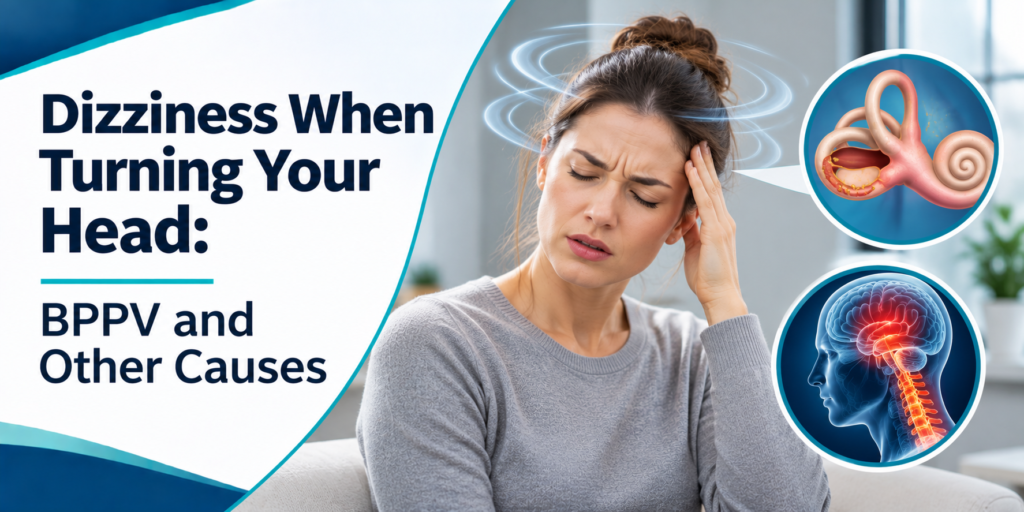
You’re checking your blind spot when dizziness when turning head suddenly makes everything feel off balance. The room appears to shift, and you reach for something solid to keep yourself steady. Then, just as quickly as it started, the feeling disappears. You’re left wondering why a simple head movement caused such a strange reaction. Many people dismiss the first episode and carry on with their day. When it happens again, though, the concern tends to grow. Understanding the common causes can help you work out what might be happening and what else could be responsible.
What’s Happening Inside Your Ear
Your inner ears contain tiny loops filled with fluid that help your brain track the movement of your head. Small calcium crystals sit in a nearby part of the inner ear, where they normally remain in place. If some of those crystals break free and move into the fluid-filled loops, they can interfere with your balance signals. This is the underlying cause of positional vertigo, particularly its most common form, benign paroxysmal positional vertigo (BPPV). When you turn your head, the crystals move and send incorrect signals to your brain, making you feel as though you’re spinning even when everything around you is still.
What the Spin Usually Feels Like
Episodes of BPPV tend to be brief but can feel intense while they last. Common BPPV symptoms include a sudden sensation that the room is spinning, usually for a few seconds and generally no longer than a minute. The dizziness often subsides when you stop moving and hold your head still. You may also feel nauseated, and vomiting can occur. Movements such as turning over while sleeping, tilting your head back to reach a high object, or bending down to put on your shoes can bring on an episode. For many people, the first movements of the morning are particularly uncomfortable. Hearing changes or ringing in the ears aren’t expected features of BPPV, so they may indicate a different condition.
Who Is Most at Risk
BPPV can affect anyone, but the chances increase with age, and it is more common in women than in men. Head injuries are estimated to account for around 7 to 17 percent of cases. Other associated risk factors include migraine, osteoporosis, and low vitamin D levels. The lifetime risk is approximately 2.4 percent. That may sound relatively low, but the condition can significantly disrupt daily activities. For a broader overview, vertigo and dizziness causes range from changes in the inner ear to conditions affecting the brain.
Other Reasons You Feel Dizzy
BPPV may be the first condition that comes to mind when dizziness follows a head movement, but other explanations are possible. Dizziness with movement can occur with a viral infection of the vestibular nerve, vestibular migraine, or a sudden drop in blood pressure when you stand up. Medication side effects may also play a role. Even dehydration, skipped meals, and a poor night’s sleep can leave you feeling dizzy. Because these problems have different underlying causes, they may need different approaches to treatment.
Not all inner ear balance problems cause brief spells. With Meniere’s disease, the spinning sensation may last for hours and occur alongside ringing in the ear or a feeling of fullness. Vestibular neuritis can cause more persistent balance difficulties, sometimes lasting for several days. These conditions differ from BPPV, which typically causes short episodes triggered by specific changes in head position. If your dizziness continues for a prolonged period or your hearing changes, make sure your healthcare provider knows.
There is also a possible connection between dizziness and the neck. Some clinicians think that stiff or injured neck joints may send inaccurate information to the brain, contributing to cervicogenic dizziness. The evidence supporting this explanation is still mixed. If head turning dizziness developed after whiplash, a previous neck injury, or spending hours in a hunched position at your computer, mention it during your appointment. A neck-related cause is usually considered only after other potential explanations have been assessed.
How It’s Diagnosed and Managed
A provider starts with your story. How long do spells last? What sets them off? Any head injury, new medicine, or hearing change? For suspected BPPV, they may move your head into specific positions while watching your eyes. That can reproduce the spin on the spot. The usual treatment is the Epley maneuver, a short series of head and body movements that guides the crystals back where they belong. One or two rounds help most people. BPPV can return, though.
People around Montgomery County sometimes ask whether neck alignment plays a part in their symptoms. Exploring chiropractic care in Norristown PA can be one way to get another opinion once serious causes are ruled out. It shouldn’t replace a medical workup.
Some people want more than a single maneuver. Vertigo and dizziness care often combines a careful history, a look at the neck and posture, and a plan for avoiding triggers. Small habits help. Sit on the edge of the bed for a moment before standing. Keep a night light on. Move your head a little slower.
When Dizziness Is an Emergency
Get emergency help right away if dizziness comes with a sudden severe headache, double vision, slurred speech, weakness, numbness, fainting, fever, or trouble walking. Those aren’t signs of BPPV. They can point to a stroke or another serious problem. Don’t wait it out.
Conclusion
A spin that shows up when you turn your head feels alarming, but it often has a clear, treatable cause. BPPV tops the list. Still, migraine, inner ear infections, blood pressure shifts, and neck problems can all play a part. Track what sets it off, how long it lasts, and what comes with it. That story helps whoever examines you find the real cause faster.
Dizzy When You Turn Your Head?
Tired of guessing why the room keeps tilting? Lifeline Chiropractic in Norristown, PA offers upper cervical care for vertigo, dizziness, and neck symptoms, led by Dr. James Stein, a Board Certified Neck Specialist who has served the community since 1996. Contact us today to book a consultation. You can also contact Lifeline Chiropractic or visit 2525 W Main St, Norristown, PA 19403.
FAQs
Should I worry if my head spins when I look over my shoulder?
Most of the time the cause is BPPV, which isn’t dangerous. A new pattern still deserves a checkup, and sudden severe symptoms need emergency help.
How long does BPPV last?
Each episode usually lasts a few seconds and rarely continues for more than a minute. Without treatment, the condition may improve within a few weeks, but the dizziness can return later.
Can I fix it with exercises at home?
Yes, healthcare providers can show you how to perform repositioning exercises at home. However, get an accurate diagnosis first. Using the wrong technique or treating the wrong ear may worsen your symptoms.
Can neck problems cause dizziness?
Possibly. Some clinicians believe neck strain or an injury may contribute to dizziness, but the research isn’t conclusive. It’s important to have a medical evaluation before assuming your neck is responsible.
When should I see a provider?
Arrange an appointment if the dizzy spells keep coming back, last longer than a few minutes, or have caused you to fall. Quickly get some emergency medical care immediately if you develop any warning signs of a serious condition.