
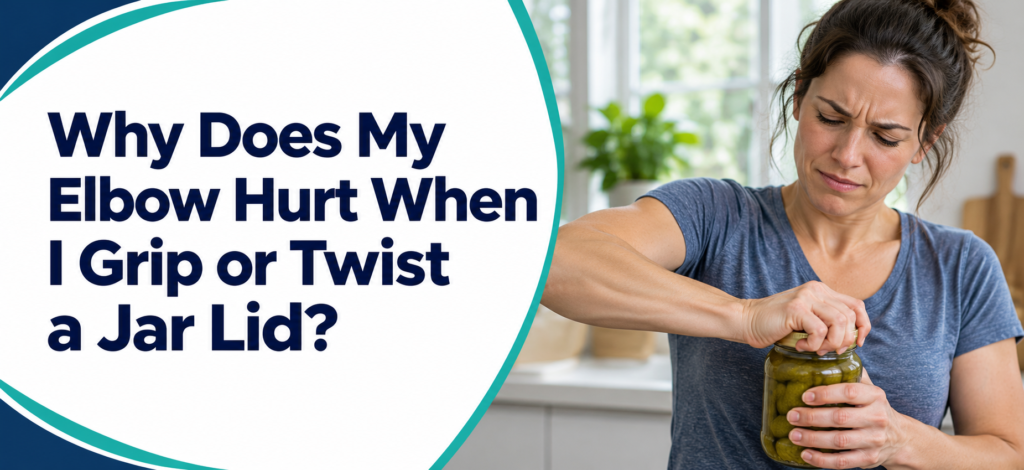
You brace a jar against the counter and give the lid a twist. A sharp ache shoots through the outside of your elbow, so you hand the jar to someone else. A few minutes later, you can straighten your arm without much trouble. Then you pick up a mug and feel it again. If that sounds familiar, pay attention to the work your hand and forearm are doing when the pain shows up. The details can help you make the next task easier and explain the problem at an appointment.
Why a small twist can feel like a big effort
A stubborn lid asks you to squeeze and turn at the same time. Your forearm muscles help keep your wrist steady as you turn. Some of the tendons involved attach near the outside of the elbow. When that area is irritated, opening a jar, turning a wrench, or lifting a kettle can bring on pain even if the elbow hardly moves. A lid that won’t budge can make you squeeze harder or bend the wrist farther than you usually would.
Pain over the outside of the elbow during gripping can occur with tennis elbow, which can affect people who rarely pick up a racquet. Pain elsewhere around the joint, an injury, or symptoms such as numbness can call for a different evaluation. Point to the area with one finger if you can. The clinic’s overview of care for elbow and other extremity symptoms can help you prepare questions about what an assessment might cover.
Notice which part of the movement hurts
Think through a task you’ve already done. Did the pain begin when you closed your hand around the lid, when you turned the lid, or when you let go? If it also happened while carrying a grocery bag, think about how you were holding the handles. A bag dangling from your fingertips may feel different from carrying it with both hands. There’s no need to repeat a painful task just to identify the moment. Your memory of the last time it happened is a useful place to start.
The same goes for weakness. “I can hold my coffee mug, but I can’t lift the full kettle comfortably” tells a clinician how much the problem affects you. If you let go because the pain startled you, say that. If your hand seemed to give way even when the pain wasn’t strong, mention that separately. Tell your clinician about tingling, numbness, or symptoms that travel into the hand too.
Make the next kitchen task easier
Start with the jar itself. A rubber grip, a jar opener, or asking someone to loosen the lid can save you from several hard attempts. Set the jar on a stable, dry surface. When carrying a full pot, use both handles or pour out part of the contents first if you can do so safely. Put frequently used items where you can lift them without reaching and turning at the same time. Small changes can make cooking less frustrating while you figure out what keeps setting off the pain.
Look for the same pattern away from home. A long day with a screwdriver, pruning shears, or a tightly gripped tool can be easy to forget by the time you feel the ache while making dinner. Write down a recent change, such as a new DIY project, longer shifts, or a different workout. If you can share a repetitive task or alternate it with a less demanding one, notice whether you finish the day more comfortably.
Take a short symptom history to your visit
An example might sound like this: “For two weeks I’ve had an ache on the outside of my right elbow. Opening jars and lifting a full kettle set it off. It usually eases after I put the item down. I started working with a screwdriver more often around the same time.” Add whether a fall or a sudden pull came first. Mention any swelling or restricted motion and whether the pain wakes you or affects work. If this is your first visit, check the new patient information for the practical details before you go.
If the pain followed an injury and you can’t move the joint normally, or the elbow looks deformed or is markedly swollen, seek prompt medical care. Recurring pain that gradually changes how you use your hand is worth discussing too. If you’re compensating by doing nearly everything with the other arm, explain which tasks you’ve had to change. That may be more helpful than rating the pain from memory.
Ask what a proposed service would address
If the assessment turns up forearm tenderness, ask which movements matter and what changes you can make during work or home tasks. If massage therapy comes up, ask which areas the therapist would work on and what information would lead them to change the pressure or avoid the sore spot. Mention recent injuries, relevant medications, and how the elbow responds to pressure.
If you are considering laser therapy, ask what the clinician found and why that service fits the problem they identified. Agree on a practical change you can use to judge progress, such as pouring from a kettle comfortably or finishing a shift with fewer interruptions. That gives you something concrete to discuss if a follow-up is needed.
FAQs
Can I have tennis elbow if I never play tennis?
Yes. The condition can occur with repeated gripping and forearm use in work, hobbies, or everyday tasks. Pain on the outside of the elbow is one relevant detail. A clinician can examine the area and consider other causes, especially if you also have numbness, swelling, or a history of injury.
Why does twisting hurt more than bending the elbow?
Twisting a lid usually combines a firm grip with forearm rotation and a wrist that has to stay steady. Bending an empty arm may place a different demand on those tissues. Note which part of the task hurts first and whether it settles when you let go.
Should I stop using my arm altogether?
If there’s no injury requiring specific restrictions, see whether you can modify the tasks that repeatedly flare the pain. A jar opener, smaller loads, or a pause between repetitive tasks may help with everyday use. Ask a clinician about restrictions if discomfort persists or your job requires hard gripping.
What if my elbow pain comes with finger tingling?
Tell your clinician which fingers are affected and when the tingling starts. Mention whether it happens at rest, when you bend the elbow, or when you use your neck or shoulder. Weakness, trouble handling objects, or symptoms that persist between tasks are good reasons to arrange an evaluation.
What should I bring to an elbow evaluation?
Bring one example that reliably brings on symptoms, a rough start date, and a note about any recent changes in work, exercise, or hobbies. If you’ve had an injury or received treatment elsewhere, bring available records. A description of how the pain changes your routine can help guide the conversation.