
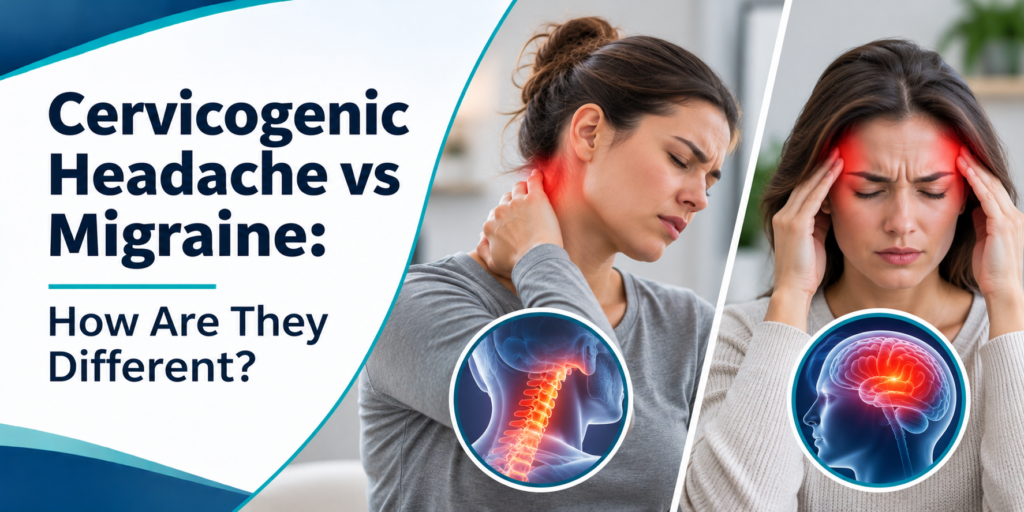
Telling cervicogenic headache vs migraine apart is harder than it sounds, even for doctors. Picture a dull ache behind one eye and a neck that won’t turn all the way. Migraine? Maybe. Maybe not. Both can hit a single side of the head and wreck an afternoon. The real difference is where the pain starts, and that changes how you handle it.
What Is a Cervicogenic Headache?
A cervical headache starts in the neck, not the brain. Doctors call it a secondary headache because something else is causing it. Joints, muscles, ligaments, or nerves in the upper neck send pain signals, and you feel them in your head. It can follow a whiplash injury, years of desk posture, or a rough night on a bad pillow. Sometimes there’s no clear trigger at all.
Cervicogenic Headache Symptoms to Watch For
The classic cervicogenic headache symptoms begin at the base of the skull and creep toward the forehead, temple, or eye. The pain usually stays on the same side every time. It tends to feel dull and steady, not throbbing. Neck stiffness comes along for the ride, and turning your head may feel tight or limited. A sudden neck movement or a long stretch in an awkward position, such as reading in bed, hunching over a laptop, or driving with your head cocked, can set it off. Some people feel an ache in the shoulder or arm on that side too. It’s a pattern worth noticing.
How Migraine Looks Different
Migraine is a neurological disorder that falls under the category of primary headache disorders. This means the condition itself causes the headache rather than the headache being simply a symptom of another illness. Migraine pain often pulses or throbs and may last 4 to 72 hours when untreated. People can also experience vomiting, nausea, and sensitivity to light and sound. In some cases, visual symptoms appear before the headache, including flashing lights or zigzag lines. These warning signs are called an aura. Bending down or climbing stairs may make the pain worse. Since migraine can produce a one sided headache, it is easy to confuse it with other headache conditions. Stress, disrupted sleep, and skipping meals are common triggers, whereas neck position is generally not the main factor.
Where the Two Overlap
Migraine and neck-related headaches can be surprisingly difficult to distinguish because their symptoms often overlap. Someone with migraine may have considerable neck tension, while a headache caused by a neck problem can sometimes bring on nausea. One systematic review describes this diagnostic challenge and notes that the overlap may contribute to misdiagnosis in roughly half of cases. If neck discomfort is a recurring part of your headache experience, it’s understandable to start looking into neck alignment and chronic headaches. The neck deserves attention, but it shouldn’t be the only possible explanation considered.
How Doctors Reach a Diagnosis
An accurate headache diagnosis involves more than simply identifying where it hurts. Your provider will ask when and where the pain starts, whether it travels, if it stays on one side, and which movements trigger or aggravate it. They may then examine your neck for restricted movement, tender areas, and signs of nerve irritation. Research suggests that the flexion-rotation test and neck flexor strength may be useful when distinguishing between headache types. Imaging can reveal structural changes, but those findings don’t necessarily explain the pain because similar changes are common in people without symptoms. A diagnostic nerve block offers another way to investigate the source. If temporarily numbing the suspected neck nerve relieves the headache completely, it provides strong evidence that the neck is involved.
What Helps Neck Driven Headaches
There isn’t one treatment that works for every headache. If the pain comes from the neck, options may include physical therapy, posture improvements, and nerve blocks. Migraine treatment generally follows a different path, which may involve tracking triggers and taking medication prescribed by a neurologist. Another option some people investigate is upper cervical care, which concentrates on the top vertebrae of the neck, an area that may be involved in some headache conditions. Before deciding which approach to try, make sure you know what’s causing the pain. An incorrect diagnosis can lead to incurable treatment and unnecessary delays.
When to Get Help Right Away
Although a neck related headache is often uncomfortable rather than dangerous, some symptoms shouldn’t be ignored. Seek emergency care for a sudden, severe headache, a high fever with neck stiffness, or a seizure. If you experience tingling that travels down your arms, arrange a prompt medical evaluation as well. Don’t put off getting help when these symptoms appear.
Conclusion
The short version: one headache starts in the neck, the other in the nervous system. Track where the pain begins, which side it lands on, and what sets it off. Then get an exam that matches the cause. If you’re near Montgomery County and want a neck focused second opinion, chiropractic care in Norristown PA is one route people look into.
Neck Pain and Headaches Running Your Week?
You shouldn’t have to plan your week around them. Contact Lifeline Chiropractic in Norristown, PA, to talk through your symptoms. Contact us or send an appointment request through our website, and we’ll help you figure out your next step.
FAQs
Can a cervicogenic headache feel like a migraine?
Yes, it can, even with nausea. It usually stays on one side, starts in the neck, and flares with neck movement.
Does a cervicogenic headache show up on an MRI?
Not on its own. Scans can show neck changes, but those also appear in people with no pain.
Can poor posture cause a cervicogenic headache?
It can. Long stretches in an awkward head position can bring one on.
Which doctor should I see first?
Start with your primary care provider or a neurologist. They can rule out serious causes and point you to the right specialist.
Can you have both migraine and a cervicogenic headache?
It’s possible. The overlap is one reason careful testing matters.